EaseRead Pro
AI text simplifier for Deaf, ESL and Plain English readers
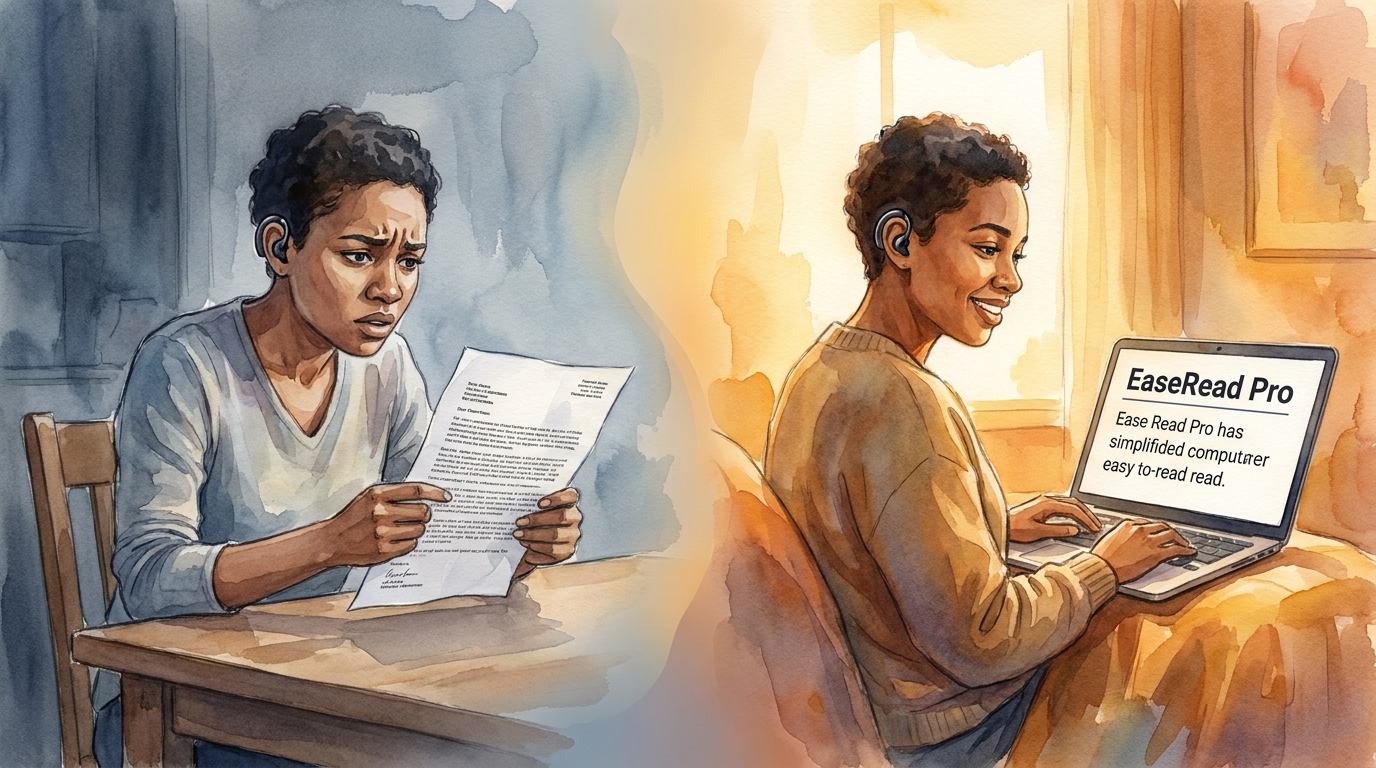
EaseRead Pro rewrites complex letters, contracts, emails, news articles and forms into clear plain English you can actually understand. Built first for Deaf BSL users, then for ESL learners, busy professionals, and anyone who finds dense text exhausting.
Who EaseRead Pro is built for
- Deaf BSL users who think in British Sign Language and find written English a second language.
- ESL learners who can read but want everyday English without idioms and complex sentences.
- Professionals who need to skim long reports, contracts or briefs without losing the meaning.
- Everyday readers dealing with NHS letters, council forms, tenancy agreements or insurance documents.
What EaseRead Pro does
- Text Explainer. Paste any text and get a clear plain-English explanation in seconds.
- Read + Write. Simplify any text or rewrite your own draft to sound clear, confident and friendly.
- AI Reply. Generate a polite, plain-English reply to letters, emails or messages.
- Reader styles. Choose Deaf English (BSL-friendly word order), ESL, Professional, or Plain English.
- Theme toggle. Light, dark, or high-contrast modes to suit your eyes.
- Chrome Extension. Highlight text on any web page and simplify it instantly.
- Privacy first. Your text is never saved to our database, never sold, never used to train AI.
How it works
- Paste the text you want simplified, or upload a document.
- Pick a reader style: Deaf English, ESL, Professional, or Plain English.
- Read the simplified version, copy it, share it, or ask follow-up questions.
Privacy
Your text stays private. We do not save it to our database. It is sent securely to our AI partner for the sole purpose of generating an explanation, then discarded. We never use your text to train AI and never share it with advertisers.
Pricing
- Free trial. Try Text Explainer with no signup required.
- Basic plan. Daily word quota for personal use, from £10 per month.
- Pro plan. Higher quota, AI Reply and Read + Write tools, priority support.
- Cancel anytime. No credit card required for the free trial.